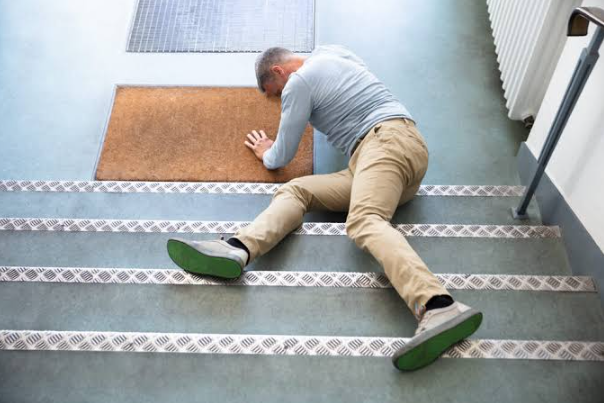
Who Is Responsible For A Slip And Fall Accident
You may still be replaying the moment in your head. One second you were walking through a store, apartment complex, parking lot, or workplace, and the next you were on the ground after a slip and fall accident, hurting, embarrassed, and trying to figure out what just happened. Then the pain sets in, the bills start showing up, and someone hints that maybe you were just not paying attention. That is where a lot of people get stuck.
Who Is Responsible For A Slip And Fall Accident usually comes down to one issue. Did a property owner, manager, business, or another party fail to fix a dangerous condition or warn you about it in time? Responsibility is not automatic, and it is not based only on where you fell. It depends on what caused the fall, who controlled the property, who knew about the hazard, and what should have been done before you got hurt.
Liability for a slip and fall accident depends on control and notice
A fall can look simple from the outside, but the legal fault often sits beneath the surface. A grocery store owner may be responsible for a spill left on the floor too long. A landlord may be responsible for broken stairs or poor lighting in a common area. A snow removal company may share fault if it did a careless job clearing ice. In some cases, more than one party played a role.
The core question is whether the person or business in control of the property acted reasonably. If they created the hazard, ignored it, or failed to inspect the area when they should have, they may be liable. If the danger appeared seconds before the fall and no one had a fair chance to fix it, the answer may be different.
This is why evidence matters so much. A wet floor with no warning sign, a loose handrail, uneven pavement, torn carpet, poor lighting, or ice at an entrance can all point toward negligence. The details matter. How long had it been there? Had anyone complained before? Were there cameras? Was there a cleanup log? Those facts often decide whether slip and fall liability exists.
See also: Pilates for Every Stage of Life: Building Strength, Mobility, and Long-Term Wellness
Property owners often deny fault even when the hazard was real
You can be injured and still get blamed. That is one of the hardest parts of these cases. Businesses and insurers often argue that the danger was open and obvious, that you were distracted, or that your shoes, phone use, or speed caused the fall. They know a person in pain may not have photos, witness names, or a clear memory.
The financial pressure builds fast. You may miss work, need imaging or physical therapy, and start wondering whether your pain will settle down or turn into a long recovery. Falls are not minor by default. The Centers for Disease Control and Prevention explains that falls can lead to serious injuries, including fractures and head trauma, and remain a major source of injury in daily life. You can read more about fall hazards and injury risks.
Older adults often face even steeper consequences after a fall, especially when balance, mobility, or bone strength are already an issue. The CDC also outlines practical fall prevention steps for older adults, which shows how common and disruptive these incidents can be.
A personal injury lawyer can identify who should be held responsible
Many people assume the answer is always the property owner. Sometimes it is. Sometimes it is the tenant leasing the space, the maintenance company handling repairs, the cleaning contractor, or another business responsible for the area. A personal injury lawyer looks at contracts, incident reports, maintenance records, witness statements, and surveillance footage to sort out who had the duty to keep the area safe.
That matters because a claim aimed at the wrong party can stall out. A lawyer also looks at whether your own actions will be used against you and how local fault rules may affect your recovery. If you were partly at fault, that does not always end the case. It may reduce what you can recover, but the claim may still be valid.
Key factors that affect responsibility after a fall injury
| Factor | What it can show | Example |
|---|---|---|
| Who controlled the area | Identifies the party with the duty to maintain safety | A store tenant controls the sales floor, while a landlord controls the shared stairwell |
| How long the hazard existed | Shows whether there was enough time to discover and fix it | A spill left for 30 minutes is treated differently than one dropped moments earlier |
| Whether warnings were posted | Helps prove whether visitors were alerted to a known danger | No wet floor sign near a recently mopped entrance |
| Prior complaints or incidents | Shows notice and a pattern of ignored risk | Tenants had already reported the loose step several times |
| Your evidence | Supports your version of events and the condition of the scene | Photos, witness names, shoes worn, medical records, and incident reports |
What to do after a slip and fall accident
1. Document the scene before it changes. Take photos and video of the exact area, the hazard, your injuries, and anything missing, such as warning signs or lighting. Get names and contact information for witnesses. Ask for a copy of any incident report or at least the report number.
2. Get medical care and follow through. Adrenaline can hide an injury for hours. A record created the same day connects the fall to your symptoms. Follow the treatment plan, keep receipts, and note how the injury affects work, sleep, driving, childcare, and basic movement.
3. Speak carefully with insurers and get legal guidance early. Do not guess about what happened, and do not downplay your pain. Early legal help can preserve evidence before video is erased and records disappear. If you are trying to prove premises liability, timing matters.
Responsibility for a fall injury becomes clearer when the facts are preserved
You do not need to have every answer on the day you fall. You do need to protect the facts before they fade. The person or business responsible is usually the one who had the duty and the chance to make the property safe, but proving that takes evidence, not assumptions.
If you were hurt and you are getting pushed toward silence, blame, or a quick denial, it may be time to talk with a personal injury lawyer and find out where the responsibility really belongs.