Cooling Balm Stick or Jar? Choosing a Format That Fits Your Routine
A jar works perfectly well until you try to use it while holding the lid, keeping a towel in place, and finding somewhere to set everything down.
It is a small inconvenience. It can also explain why someone who likes a balm’s texture might prefer it in a different container.
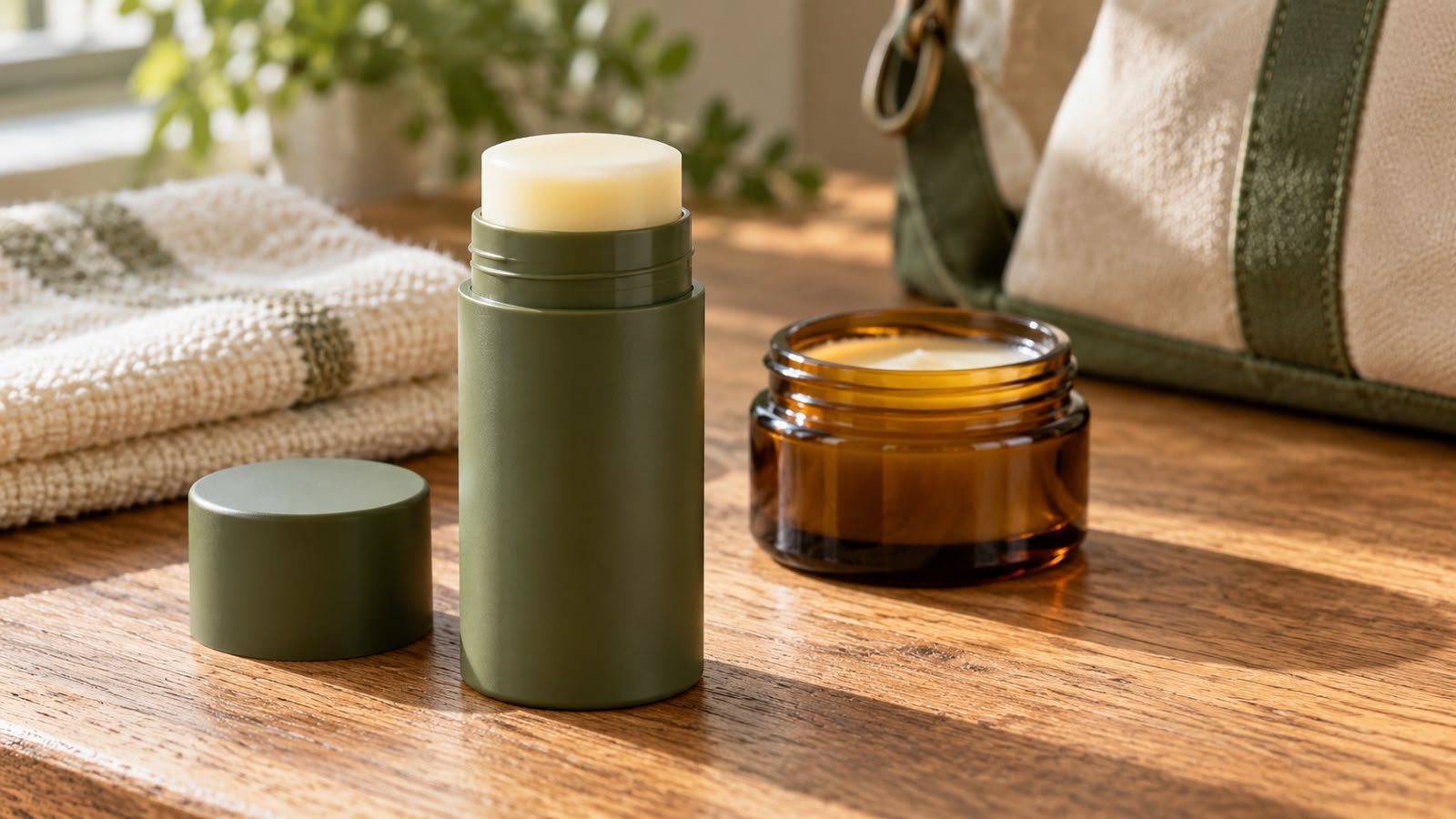
A cooling balm stick offers another way to apply the product. Instead of scooping balm from a jar, you apply it directly from the stick. For people who prefer fewer steps, that difference may be the main attraction.
But a stick is a format, not a complete description of the formula. Before choosing one, it helps to separate the packaging questions from the ingredient questions. Both matter, and neither needs to be complicated.
What Changes When Balm Comes in a Stick?
The most obvious difference is how the product reaches the skin.
With a jar, you remove an amount using clean fingers or an appropriate applicator, following the product’s instructions. A stick holds the solid balm inside a container designed for direct application.
That can make the first step more convenient. There is no need to scoop the balm out before applying it to an accessible area.
Direct application does not necessarily mean there will be no hand contact afterward. Depending on the directions and the routine, you may still massage the area after applying the product. It also does not guarantee that the formula leaves no residue.
Those details depend on the actual balm, the amount used, and how it is applied.
Think of the container as a practical choice. Someone who enjoys taking time with a jar may see little reason to change. Someone who finds scooping inconvenient may appreciate the stick immediately.
See also: Pilates for Every Stage of Life: Building Strength, Mobility, and Long-Term Wellness
The Cooling Formula Still Deserves a Look
Two products can share a similar container and feel quite different.
For a cooling balm stick, check what creates the cooling sensation and what makes up the base. The product name alone cannot tell you how firm it is, how readily it spreads, or what finish it leaves.
Menthol is one ingredient used to create a cooling sensation. That sensory effect should be considered separately from claims about treating an injury or medical condition. A noticeable feeling on the skin does not establish what a product can do beyond its stated, supported purpose.
The intensity of the sensation is also a preference. More noticeable is not automatically more suitable.
Read the complete description and precautions before buying. If a company offers several cooling products, ask how they differ rather than assuming the strongest-sounding name is the best choice.
The useful comparison is between the formulas and their directions, not the adjectives on the front.
A Solid Format With a Butter-and-Oil Base
A stick needs a formula that works in its container, but that still leaves room for different ingredients and textures.
Mountain Legend’s cooling balm stick combines menthol with cocoa butter, mango butter, shea butter, and beeswax. Its product page also lists almond, avocado, macadamia, olive, and argan oils.
The company describes the stick as a way to apply balm to the area intended for massage without scooping it from a jar. At the time of writing, the page marks the product as coming soon.
That description makes the format’s purpose clear. The convenience comes from direct application, while the ingredients describe the product being applied.
Shoppers should still review the final label when it becomes available. Packaging photographs and a familiar ingredient name cannot answer every question about how a finished product will feel.
Think About Where You Will Use It
A product used beside a comfortable chair has different practical requirements from one carried around during the day.
At home, a jar may be easy to accommodate. There is usually somewhere to put the lid, keep a towel, and store the container afterward. If that arrangement already works, a stick may be an option rather than an improvement.
For a bag, desk drawer, or weekend case, consider the actual container dimensions, closure, and storage requirements. Do not assume every stick fits comfortably in a pocket or tolerates being left in a warm vehicle.
Check the manufacturer’s instructions before deciding where it will live.
It is also worth considering access. Direct application may be straightforward on a forearm but less convenient somewhere difficult to reach. A different format does not remove the need for a comfortable position.
Choose around the routine you have, rather than the one pictured in an advertisement.
Check the Ingredients You Personally Avoid
A convenient container does not make every formula suitable for everyone.
Read the ingredient list for anything you already know you need or prefer to avoid. For example, beeswax matters to shoppers avoiding animal-derived ingredients, while particular oils may matter to someone with an allergy concern.
The Mountain Legend product page identifies beeswax and almond and macadamia nut oils. It advises external use only, avoiding eyes and broken skin, patch testing a small area first, and stopping use if irritation occurs.
Those are useful details to review before the product becomes part of a routine.
If an ingredient raises a question, resolve it before use. A seller can clarify what is in a formula; a qualified healthcare professional can advise on concerns specific to your circumstances.
There is no need to guess because a product looks similar to one already used.
Direct Application Still Needs Careful Handling
A balm stick removes the scooping step, but the exposed surface still needs appropriate handling.
Follow the instructions for opening, applying, closing, and storing the product. Keep the cap clean and replace it securely after use. Avoid leaving the open stick where it can collect dirt or come into contact with unrelated surfaces.
Because the applicator touches the skin, keep it for personal use rather than passing it around as a shared sample.
Pay attention to the packaging mechanism, too. A twist-up or push-up container should be operated as directed. Exposing more product than necessary can make application awkward and may leave the solid balm less supported.
None of this needs an elaborate cleaning routine. It simply means treating the container as part of the product rather than something that stops mattering once the lid comes off.
Compare the Amount Inside, Too
A tall container can look substantial in a photograph while holding less product than expected.
Check the stated net contents and compare equivalent measurements when looking at prices. The outside size is useful for storage; the amount inside is useful for value.
A stick may cost more per ounce than a jar and still be the format someone prefers. That is a reasonable choice when the convenience is worth it to them.
What matters is understanding the tradeoff. Paying for a preferred application method is different from assuming two differently shaped containers hold the same amount.
Shipping charges and availability also belong in the comparison, especially when trying a product for the first time.
Let Convenience Be Specific
“Easy to use” can mean several things.
It might mean a lid that opens comfortably, a container that fits in a drawer, or a format that avoids scooping. Decide which of those actually matters before choosing.
A cooling balm stick can be a practical option for someone who likes direct application and wants a solid format. A jar may remain the better fit for someone who prefers removing a small amount and working with it by hand.
Review the formula, follow the directions, and give the packaging the same attention as the product description.
The right format is often the one that removes a small annoyance from an otherwise familiar routine. Sometimes that is all the improvement needed.