Mount Kailash Tour Permits Explained: Tibet Visa, group permit and prices
The very first thing any traveller should learn before he or she even considers visiting Mount Kailash, is that there is no place where you can book a ticket, pack your bags and fly away. Instead, it is a process that starts way before you lay your eyes on the mountain, and therefore involves paperwork, planning and a proper understanding of how traveling in this section of the world works. Whether you begin in Kathmandu or another country, the journey will be very different from any other trip you have taken.
When you begin to research Mount Kailash, you soon learn that it is not a matter of distance or budget. It is about access. The mountain is located deep in the Tibet Autonomous Region, making it both geographically remote and politically sensitive. Because of this, the Chinese government has created a strict system of permits and regulations that all foreign travelers must follow. Understanding these rules in advance makes the journey much smoother.
Why Mount Kailash Requires Special Permits
Mount Kailash is no ordinary mountain. Various religions consider it holy, including Hinduism, Buddhism, Jainism, and Bon. Since ancient times, pilgrims have come here to complete the sacred kora, or circumambulation, around the mountain as it is thought to confer spiritual cleansing and blessings. This religious and cultural significance provides another dimension of sensitivity to the area.
Meanwhile, the terrain of the region is also challenging. The elevation is very high, often above 4,500 meters and there is a lack of infrastructure. Roads are not always in good condition and the weather may turn abruptly and health centers may not be readily available. Due to these reasons the authorities desire to make travel to be controlled and planned.
The Tibet Autonomous Region is also under tight control of the Chinese government due to some political reasons. Western Tibet, where Mount Kailash is located, is even more sensitive because it lies close to the borders with Nepal and India. As a result, independent travel is not allowed for foreign nationals. Foreign travelers are not allowed to change their route freely or travel independently outside the approved itinerary
Rather, any tourist will have to pass through a licensed tour operator. These operators will also handle the permits, transportation, guides and also make sure that your trip is executed as per the approved schedule. Although this might appear to be restrictive, it in fact simplifies the process and offers some sort of safety that is very much needed in such an isolated and a harsh environment.
Step One: The Chinese Visa
Obtaining the right visa is the first formal procedure of your Mount Kailash tour. You will require the regular Chinese tourist visa in case you are accessing Tibet via mainland China. It is a visa that is issued by Chinese embassies/ consulates and which permits you to enter into the country in a legal manner.
It should be noted though that this visa does not in itself grant you entry to Tibet. This is one of the most common mistakes that many travelers do and think that they can travel anywhere in the country once they possess a Chinese visa. In Tibet, it is not the case, and special permits are needed.
Those who are traveling out of Nepal, it is a different story. Rather than obtain an ordinary Chinese visa in your own country, a group tourist visa must be obtained in Kathmandu. It is among the most popular paths of the tours to Mount Kailash and it is more convenient to many travelers.
The group visa is issued for all travelers together on a single document. It is not stamped in your passport and you cannot use it on its own. This means your travel is tied to the group for the validity of the visa. Everyone must enter and leave Tibet together on the same itinerary. Although it restricts flexibility, all travel arrangements are made to uniformity with the approved permits.
The procedure to get the group visa normally takes a couple of days, and in the process, you will have to remain in Kathmandu. Much of the paperwork will be done by your tour operator but you will need to plan on this waiting period as part of your overall travelling plan.
Step Two: Tibet Travel Permit
The next important thing to do after sorting your visa is to get the Tibet Travel Permit. It is the most crucial document to enter Tibet, and is issued by the Tibet Tourism Bureau. You are not allowed to take a flight or train to Tibet or pass through the numerous checkpoints en route without this permit.
This permit will be obtained on your behalf by your tour operator. You will be required to send a copy of your passport and your visa and the operator will do the rest. The processing time is usually around 7 to 14 working days and this implies that you should arrange your trip in advance.
The Tibet Travel Permit is more than just an entry document. It also specifies your itinerary in Tibet. It also tells you the locations you can go, and your path. It is very significant that you do not deviate off your planned itinerary. It is not permissible to take an alternative path, which may cause difficulties.
Step Three: More Kailash Mountains Permits.
The Tibet Travel Permit alone is not enough to reach Mount Kailash. It is remote and close to sensitive borders; hence, extra permits are required. One of them is the Alien’s Travel Permit, which is required for travel outside Lhasa, including areas such as Shigatse, Saga, and Darchen.
The other important permit is the Military Permit. This is necessary since Mount Kailash lies in the far-western border region of Tibet near Nepal, India, and the sensitive Ngari area and in this way, it is a strategically sensitive region. This permit is more complicated to obtain and requires a number of weeks. Your tour operator should provide specifics on your itinerary and personal information to pass on.
In certain instances a Foreign Affairs Permit can also be needed. Whether you need a Foreign Affairs Permit depends on your route and nationality, and your tour operator will inform you if it is required. All these extra permits might appear daunting, yet they are all built into the system allowing regulated entry to this one-of-a-kind area.
A guide can ensure that all the permits will be checked at the checkpoints and local laws will also be followed. Communication, logistics, and problem-solving are also aided by the guide along the way. Group travel makes the journey easier and less stressful in many ways.
Expenses and What to Expect
A Mount Kailash tour is a huge investment and it is important to know the cost structure. The biggest cost is the tour package, which typically comprises of transport in Tibet, lodging, guide service, and permit formalities.
The package usually includes permit fees, but they comprise a high percentage of the total cost. In case you are traveling through Nepal then the group visa cost is an extra cost paid separately in Kathmandu.
Another significant expense is flights. Depending on your starting location, airfare to Kathmandu or Lhasa can vary widely. Flights should also be booked early so as to get better prices.
Besides the following overarching costs, there are individual costs to take into account. These are food, snacks, guide and driver tips, travel insurance and appropriate high altitude gear. The trip requires warm clothes, good trekking shoes and simple medical kits.
Although the total price may seem high, it reflects the logistical challenges of organizing travel in such a remote region. All the transportation, accommodation and support services are more challenging to secure in this setting and that is why the cost of visiting the places is more expensive than visiting normal travel places.
Challenges and Preparation
Taking a trip to Mount Kailash is not only an economic one, but also a physical and psychological one. One of the largest factors to be taken into account is the high altitude. Much of the journey takes place above 4,000 meters and anyone can experience altitude sickness no matter how fit he or she is.
You should acclimatize properly, and most itineraries are designed to give your body enough time to adapt. You should pay attention to your body, stay hydrated, and avoid overexertion.
The weather is also unpredictable. Temperatures can drop suddenly even during the main travel season, and powerful winds are typical. It is important to have the appropriate clothing and equipment.
Delays are another possibility. Weather, permit problems, road conditions can also have an impact on your schedule. That is why it is so crucial that it is flexible. It is advisable to create some additional time in your scheduled program, in case of unforeseen occurrences.
One of the most effective ways of reducing these challenges is by selecting a dependable tour operator. An expert operator will process permits hassle-free, competent guides and make sure that your adventure will be as smooth as possible.
Spiritual, cultural experience.
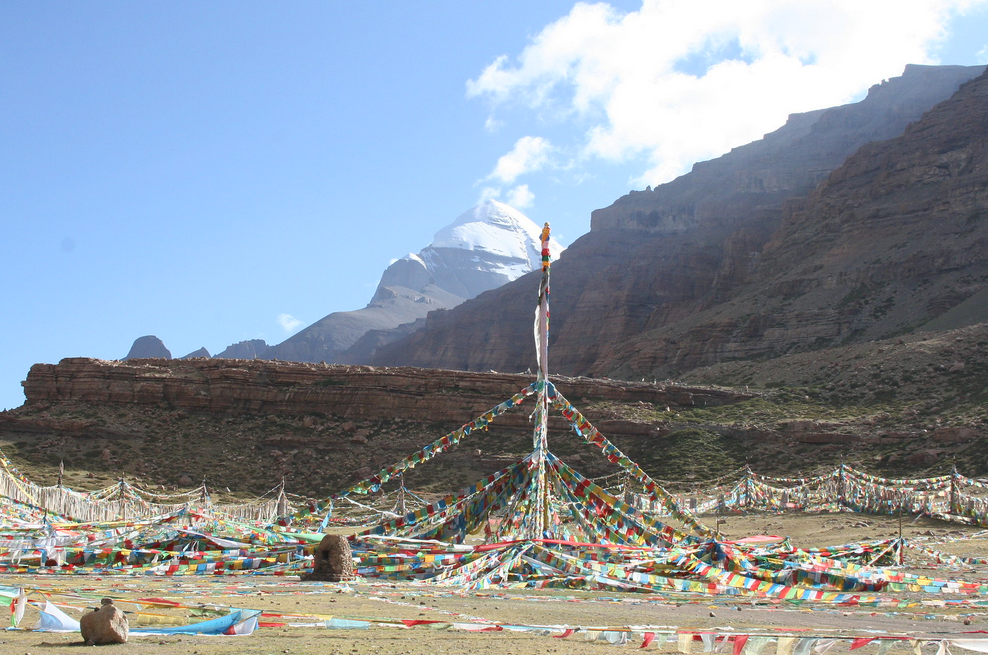
There is more than just the logistics and challenges associated with Mount Kailash. It is among the most holy locations on the earth that draws pilgrims of various religions and cultures. Kailash Kora, trekking along the mountain, is the most important act, which is taken to be very spiritual.
The experience is powerful even for travelers who are not on a religious journey. The vast landscape, the silence, and the spiritual importance of the mountain create an atmosphere that is difficult to describe. It is a place where nature and spirituality come together in a powerful way.
It is not the destination but rather the experience and the way to the destination. Each step, each difficulty, and each moment will lead to the further understanding of the place and yourself.
Conclusion
Mount Kailash Tour Permits Explained: Tibet Visa, Group Permit and Costs explains that visiting Kailash is not a simple thing to do but rather about planning, preparation and dedication. The visa and permit system might appear to be complex initially, but all these steps are necessary to ensure that the journey can be realized.
Since the process of getting the proper visa to the Tibet Travel Permit and any other permission will have to be thoroughly planned and organized. The expenses and limitations correspond to the fact of traveling in a far-off and mountainous area, where logistics are multidimensional and access is monitored.
After all the formalities are followed, the emphasis is on the actual journey. The voyage through the Tibetan Plateau, to Mount Kailash and the sight of its beauty and meaning is an experience that one enjoys throughout their lifetime.
Ultimately, this is not merely a road to a destination. It is all about the process, challenges, and having something really extraordinary. The trip to Mount Kailash can be not only possible but also deeply meaningful with the proper preparation and attitude.